Tricolored Heron on its nest
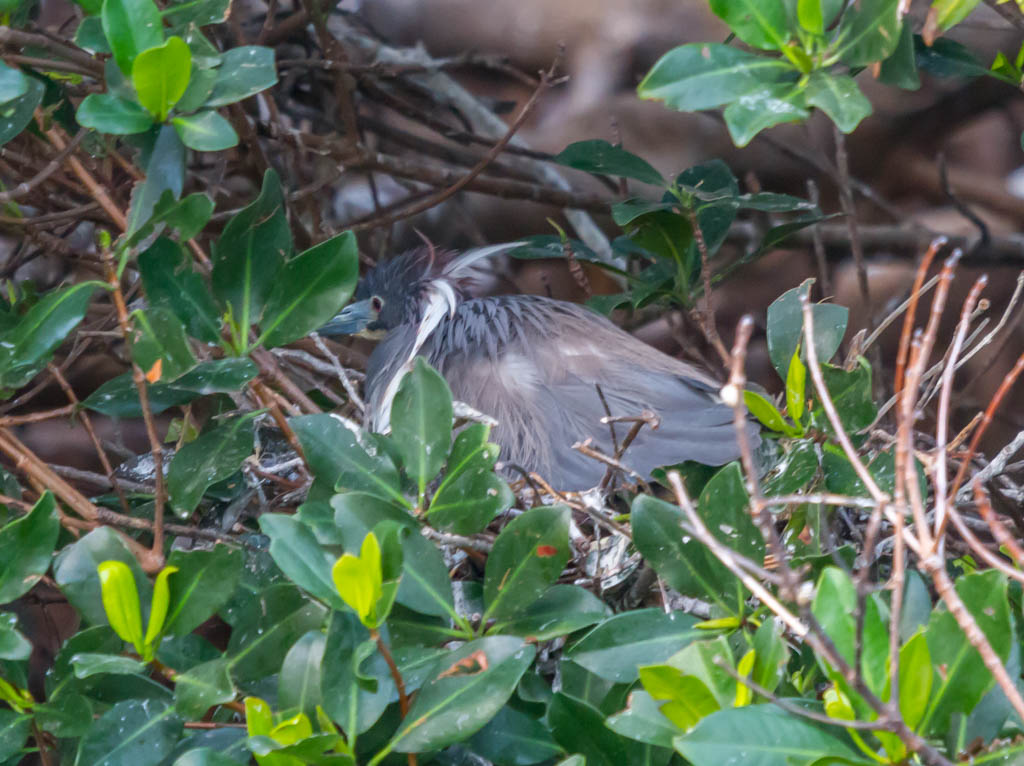
These herons have a large range, estimated globally at about 500,000 sq miles.

They are native to the Americas and nearby island nations and are year-round residents in Florida.

Sexes are similar in appearance here in breeding plumage with the white plumes on the top of their head and the deep blue bill.

Potpourri

Black-crowned Night-Herons

These night-herons breed in parts of southcentral Canada throughout the U.S. all the way to southern South America.

They tend to winter in the southern half of the U.S. and are year-round residents of our state.

Snowy Egret coming in for a landing

Courtship display of bird in High Breeding plumage

There is evidence that a pair of Snowy Egrets cannot recognize each other except at the nest.

Even at the nest, a bird arriving to relieve its mate must perform an elaborate greeting ceremony in order to be attacked as an intruder.

The lores turn red when these birds are in high breeding plumage.

What a drop-dead gorgeous bird this is.

Logo Trivia


