Tuesday, June 6, 2017

8-7-16: Frederick Sound near Kake

Found this post that never got published.  Enjoy.


A beautiful day


One of the Humpback Whales was Bubble-net feeding all by himself.  Usually several, often 10-12 whales will do this feeding behavior.


Though this looks like a "foot print" made by the flukes as the whale swims, this is actually a bubble-net that this whale made by expelling air bubbles which rose to the surface keeping small fish inside the net as they don't realize they could just swim right through the bubbles and escape.  The whales usually explode up through the circle of bubbles with their mouths open and break the surface but this whale did all that just below the surface.  We could see him from the top deck of Delphinus
.


Spider web that lasted several days on the front railing of Delphinus


Male and female White-winged Scoters


This baby Sea Otter was bleating like a goat calling for its mother. We heard it before we saw it.


Finally Mom showed up and all is well.


Pigeon Guillemots are members of the Auk family and are endemic to the Pacific Ocean.
 They feed in shallower water than most other auks, puffins and murrelets.


 It's interesting to watch them scale essentially vertical rock faces by vigorous flapping of their wings combined with the use of the sharp claws on their webbed feet.


Monday, June 5, 2017

Horicon Marsh NWR: 5-26-17


Female Red-winged Blackbird


Male Red-winged Blackbird


Male Common Yellowthroat


The male performs a special flight song, given as he rises high into the air on fluttering wings.


When choosing a mate, females appear to prefer males with larger masks.


Eastern Chipmunk


Blue-winged Teal 
Female on the right


Eastern Wood-Pewee


Though they sing throughout the day, we especially enjoyed listening to their ballads before dawn's light and well after the night surrounded the trees.


Staying warm!


Sunday, June 4, 2017

House Wren: Goose Lake Prairie State Natural Area, IL 5-31-17


House Wren


House Wrens nest inside tree holes and nest boxes.  As the season progresses their nests can become infested with mites and other parasites that feed on the wren nestlings.  Perhaps to fight this problem, wrens often add spider egg sacs into the materials they build their nests from.  Once the spiders hatch, they help the wrens by devouring the nest parasites.


The House Wren has one of the largest ranges of any songbird in the New World.  It breeds in Canada through the West Indies and Central America, southward to the southernmost point of South America.


Though a House Wren weighs only as much as two quarters, it is a fierce competitor for nest holes.


Wrens will harass and peck at much larger birds, sometimes dragging eggs and young out of a nest site they want - even occasionally killing adult birds.


Willow Slough Fish and Wildlife Area, IN: 5-31-17


Female Tree Swallow


Spicebush Swallowtail Butterfly


Male Baltimore Oriole singing to the ladies


Want to stay out of his way!


Turkey Vulture at the roadside luncheonette


Barn Swallow nest


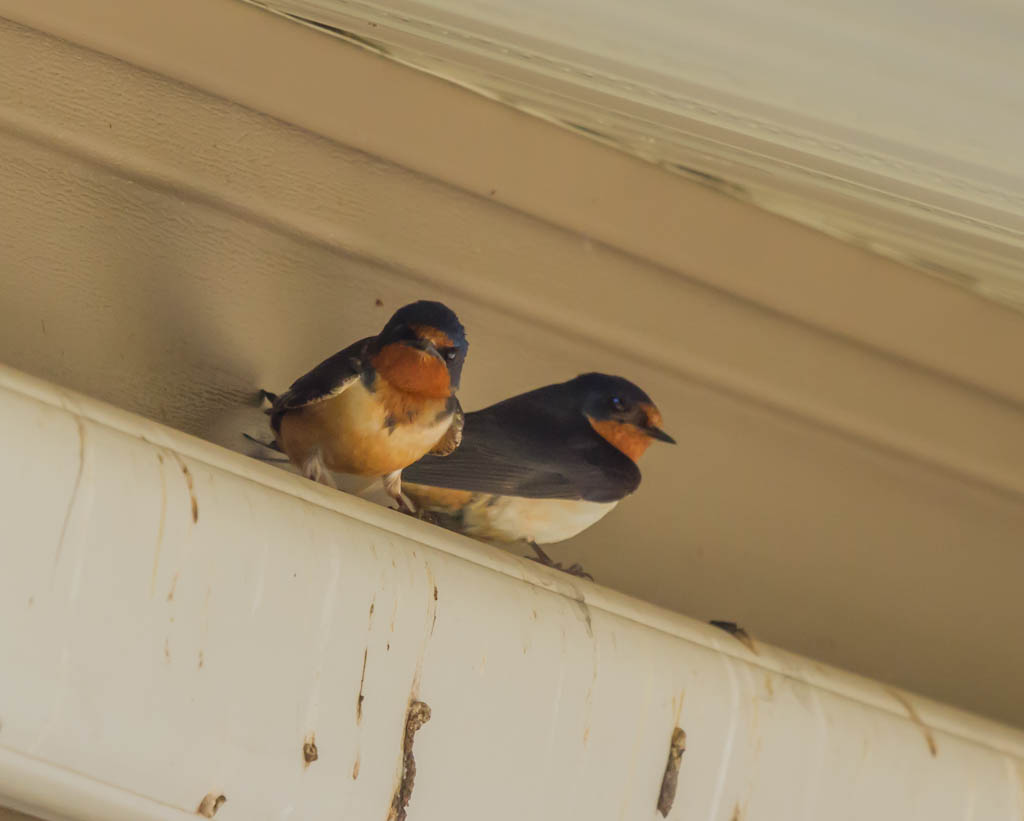
Male Barn Swallow


Eastern Tiger Swallowtail Butterfly


Just can't not take their picture when I see them, especially when they're on flowers


"Don't bother me.  This is MY spot!"


Whoops!