Wednesday, December 26, 2018

Food fight: Ring-billed Gull vs Laughing Gull: 12-15-18


Larger Ring-billed Gull had just caught a juicy tidbit and was trying to land on the marker to it it, hopefully undisturbed.  However, it was not to be as an opportunistic (aka “lazy”) Laughing Gull descended on top of the Ring-bill trying to steal its prey.


And off they went on the chase


The smaller Laughing Gull is in hot pursuit.


The Ring-bill is holding tight


The Laughing Gull is squawking loudly and is just a short distance behind the Ring-bill.


Finally the Ring-bill drops the morsel and the Laughing Gull does a 90 degree instantaneous course change to dive after it.


The Laughing Gull actually stalls its flight so it can drop and grab the fishy item the instant it hits the water


The Ring-bill returns to the marker without getting to enjoy its Omega-3 lunch.


Sunday, December 23, 2018

Ospreys on the monthly bird count: 12-15-18


Male Osprey


Ospreys are unusual among hawks in possessing a reversible outer toe that allows them to grasp fish with two toes in front and two behind.


Barbed pads on the soles of the birds’ feet help them grip slippery fish.


Ospreys are excellent anglers and their diet is almost totally restricted to fish.


Saturday, December 22, 2018

Savannah NWR, SC: 12-21-18


Glossy Ibis


Male Ruddy Duck


Black-bellied Whistling-Ducks


Probably Mom, Dad, and their youngsters


Song Sparrow


Northern Mockingbird


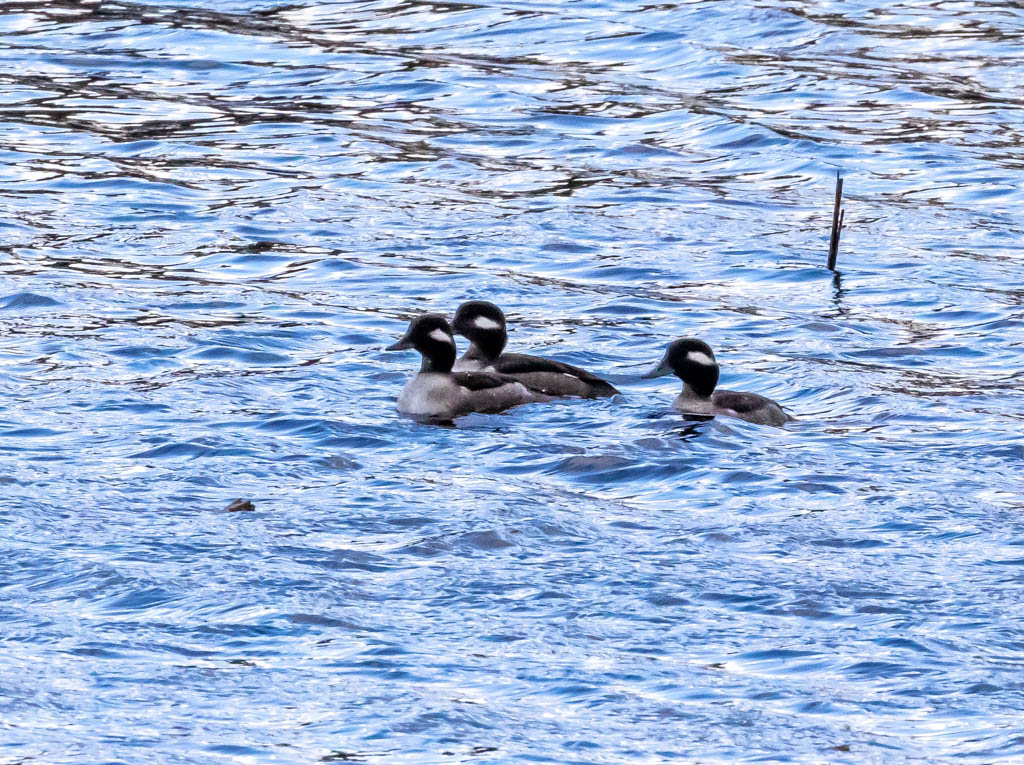
Female Bufflehead Ducks


Well-camouflaged Great Blue Heron


Friday, December 21, 2018

Savannah NWR: 12-18-18


Chipping Sparrow


Their loud, trilling songs are one of the most common sounds of spring woodlands and suburbs.


Common Buckeye: This beautiful butterfly is found in all 67 counties in FL


American Crows


White Ibis


My partner, Linds, is always on the lookout


Pied-billed Grebe


Resource partitioning: This spider web is low and parallel to the ground to catch prey near the ground in a vertical plane.  Other spider species that build webs perpendicular to the ground and several feet higher in the trees are after prey flying horizontal to the ground.  That way both spider species can inhabit the same area without necessarily competing for the same prey.


Thursday, December 20, 2018

Bird Survey birds: 12-15-18


Little Blue Heron


Walking along the seawall at Eckerd College


Laughing Gull


In winter plumage.  These gulls are the only gull species that breeds in our state.


Horned Grebe, a winter visitor


Red-breasted Mergansers, more winter visitors


They prefer salt water more than the other two species of North American mergansers.


Belted Kingfisher, also a winter visitor


Thankfully the kingfisher didn’t get tangled in the monofilament line and the green float behind it.