Monday, May 29, 2017

Virginia Rails at Horicon Marsh NWR, WI: 5-28-17


Virginia Rail


Because of its tendency to skulk among the vegetation, these next 3 shots are typically what I end up with when trying to photograph these elusive birds.


Sometimes, though rarely, one gets a few better views of these beautiful birds.


They can actually swim under water, propelling themselves with their wings.  They swim in this way probably only to flee predators.


Winter visitors to Florida 


The Virginia Rail as well as the other rail species have the highest ratio of leg muscles to flight muscles of any birds.


We were actually able to watch the female settle down into her very well-camouflaged nest.


You can just barely make out her dark body in the cup-like nest in the center of the photo.


The forehead feathers of these rails are adapted to withstand wear from pushing through dense marsh vegetation.


 Whoops!


Sunday, May 28, 2017

Terns on "Ternpike Road" as it's called in Horicon Marsh NWR, WI: 5-26-17

Both Forster's Terns and Black Terns are on Wisconsin's State Endangered Bird Lists.  The Black Tern is also a federal species of special concern.  Both species nest in colonies on the marsh and Horicon is one of the best remaining nesting locations in Wisconsin for both types of terns.


Forster's Terns


Common on the refuge and they nest here


They breed in marshes near Black Terns.


Forster's Tern is the only tern restricted almost entirely to North America throughout the year.


Black Terns


Also common and nesters here


These terns are very social.  They breed in loose colonies and usually forage, roost, and migrate in flocks of a few to more than 100, and occasionally up to tens of thousands!


The male performs a display flight where he carries a small fish or dragonfly in view of potential mates.


A female that accepts the invitation follows him to a perch where he feeds her the prize.


Saturday, May 27, 2017

Horicon Marsh National Wildlife Refuge, WI: 5-26-17


Our campground is about 20 miles from the refuge


On our way to the refuge we saw this immature Red-tailed Hawk on the wire.


Male Tree Swallow


Male Bobolink


These birds winter in the extensive grasslands of southern South America and have one of the longest migration routes of northeastern songbirds


The Bobolink is the only American bird that is black underneath and white on the back.  This coloring makes the male stand out while he is performing his displays.  After breeding he changes into a drab, camouflaged plumage to spend the rest of the year.


Thirteen-lined Ground Squirrel


Tend to eat seeds of grass and herbs and some insects.


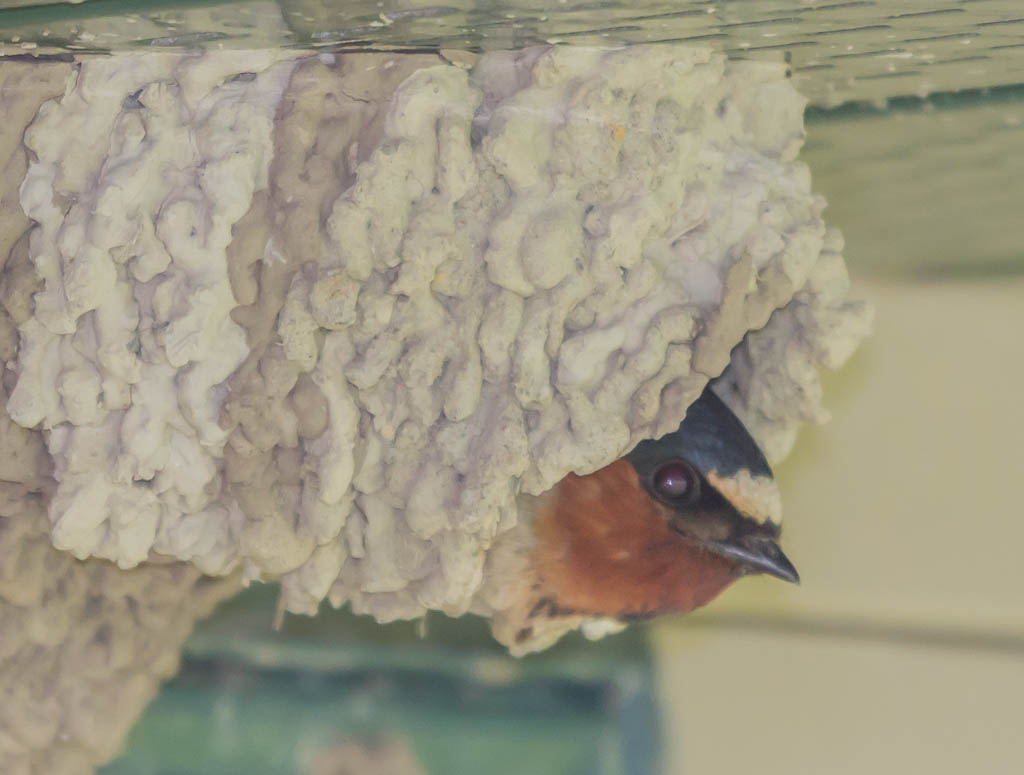
Cliff Swallow


Females are known to lay eggs in their own nest and then carry one of the eggs in its bill and put it in another female's nest


Friday, May 26, 2017

Nicole National Forest, WI: 5-25-17, Thursday

As we move to our campsite near Horicon Marsh NWR for the next 4 nights, we do not know whether or not we will have cell or internet coverage so we may be out of touch until Tuesday.  Hope not but ....
Male Yellow-bellied Sapsucker


The only woodpecker in the Eastern U.S. that is completely migratory.


Female Orchard Oriole


This oriole is the smallest North American oriole.


Male Orchard Oriole


Roseate Skimmer Dragonfly


These dragonflies are distinguished by their lavender thorax and pinkish abdomen.


Large-flowered Trillium


Blue-headed Vireo (a new trip bird for us today)


The only vireo within its range that makes extensive use of coniferous forests, although it also occupies deciduous habitats as well.


Red-eyed Vireo


The males are among the most persistent singers of all birds and have been recorded singing more than 10,000 songs a day in spring.  The song is beautiful to hear as we walk through the forests.


Chestnut-sided Warbler


This beautiful warbler sings two song types: one is accented at the end, the other is not.  The first (and the one he was singing this morning which alerted us to his location) is used before the arrival of the females and in the early nesting cycle.  The second is used while raising young


For kids in the park


Hmmm!


It gets cold up here in northern Wisconsin on Lake Superior.